
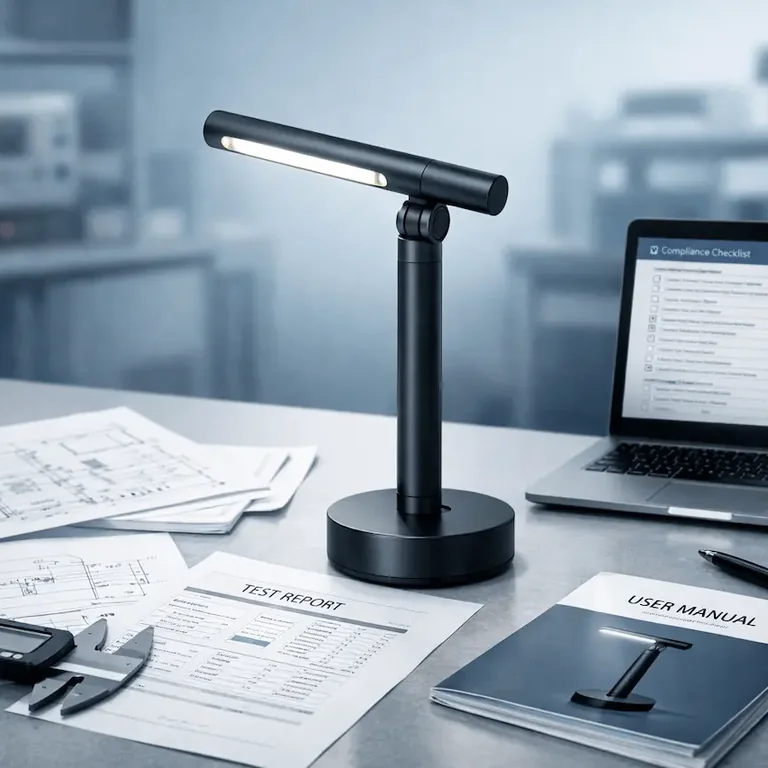
Getting CE marking is not a matter of applying to a public authority and waiting for a certificate. It is a technical and documentary process carried out by the manufacturer — or whoever assumes legal responsibility — to demonstrate that a product meets the essential requirements of the applicable European legislation. Only once that process is complete can the CE marking be placed and the product legally sold in the EU market. This guide explains how to get CE marking step by step: what the CE marking process involves, what requirements you need to meet, what documentation is required and when a notified body needs to intervene.
Who this applies to — and when it does not
CE marking is mandatory for any product placed on the market in the European Economic Area (EEA) that falls within the scope of a European directive or regulation requiring CE marking. This article is particularly relevant for:
- Manufacturers outside the EU who want to export products to Europe for the first time.
- Importers and distributors who take on the manufacturer's responsibilities.
- Brands that have launched a product in Europe without properly verifying their compliance.
- Compliance managers who need to understand the full process before validating documentation.
CE marking does not apply to all products. Some consumer products are covered by sector-specific legislation that does not require CE marking, or are exempt based on their category or intended use. If you are unsure whether your product needs CE marking, that preliminary analysis is the starting point — not the last step.
What getting CE marking actually means
CE marking is not granted by any public body. It is a declaration by the manufacturer — or the importer when acting as such — that the product complies with the applicable European legislation, made under their own responsibility. This has a direct implication: if the product does not meet the requirements, responsibility falls on whoever signed the EU Declaration of Conformity and affixed the marking. Not on the laboratory that conducted the tests, nor on an external certification body. On the responsible economic operator.
Key point
Affixing CE marking without having completed the conformity process is not a minor irregularity. It is an infringement with real consequences: product withdrawal from the market, administrative penalties and liability for damages.
What happens when the CE marking process goes wrong
The most common problems do not arise in product design — they appear in document management and in a poor understanding of the process. Some real-world scenarios:
- A product held at customs because the technical file is incomplete or does not address the applicable legislation.
- An EU Declaration of Conformity that references incorrect directives or is not signed by the right person.
- CE marking affixed to a sample that does not represent actual series production.
- Laboratory tests commissioned without first defining the product's intended use.
- Documentation in the wrong language for the destination market.
Any of these errors can lead to a review by market surveillance authorities, a withdrawal order, or the inability to continue selling the product until the situation is corrected.
CE marking requirements: what you need to have clear before you start
Before starting the conformity process, some basic questions need to be resolved:
- What is the product's intended use and who is the end user?
- Which markets will it be sold in (EU, EEA, UK)?
- Who will be the responsible economic operator: manufacturer, importer or authorised representative?
- Are technical specifications, drawings, materials and conditions of use documented?
If you cannot answer these questions clearly, the conformity process cannot move forward on solid ground. The product's technical information is the foundation on which everything else is built.
The CE marking process step by step
Step 1. Define the intended use of the product
The entire conformity process starts with the intended use: what the product is designed for, who will use it, under what conditions and with what limitations. This definition determines which legislation applies, which tests are required and what warnings must be included in the documentation. A poorly defined or vague intended use can invalidate parts of the process or create inconsistencies that authorities will detect during an inspection. It is not an administrative formality — it is the technical foundation of the entire process.
Step 2. Identify applicable directives, regulations and harmonised standards
Once the intended use is defined, the next step is to determine which European legislation applies to the product. A single product may fall under several directives or regulations at the same time.
The European Commission maintains an official database of product legislation and applicable harmonised standards. You can consult it on EUR-Lex and on the New Legislative Framework (NLF) portal.
Harmonised standards are technical documents published by European standardisation bodies (CEN, CENELEC, ETSI) that, when correctly applied, allow a presumption of conformity with the essential requirements of the legislation. Their use is not mandatory, but they significantly simplify demonstrating compliance.
Not all clauses of a harmonised standard are always applicable to every product. Determining which parts apply and which do not requires a technical analysis of the product — not a superficial reading of the standard's index.
Step 3. Analyse essential requirements and assess risks
Essential requirements are the safety, health, environmental protection or other obligations set out by the applicable legislation. They are not optional criteria: the product must comply with all of those that apply to it. The risk assessment identifies the potential hazards of the product, estimates the probability and impact of each one, and documents the measures taken to reduce them. It is a structured process — not a list of warnings — and forms part of the technical file. This phase also determines whether there are harmonised standards covering the identified risks and whether laboratory tests, calculations, simulations or other technical verifications are required.
Step 4. Choose the evaluation route: notified body, accredited laboratory or self-assessment
One of the most confusing aspects of the CE marking process is deciding who should conduct the tests and conformity assessment. The answer is not straightforward: it depends on the type of product, the applicable legislation and, in many cases, the sales channel you intend to access.
Notified body: when it is mandatory
A notified body is a third party authorised by national authorities and recognised by the European Commission to carry out conformity assessments for certain product categories or specific assessment modules. When its involvement is required by the applicable legislation, its identification number must accompany the CE marking on the product. Notified body intervention does not apply to all products. It primarily affects categories with higher potential risk — such as certain medical devices, higher-category personal protective equipment or pressure equipment — and only when the legislation requires an assessment module involving a third party. For most common consumer products, it is not mandatory.
Accredited laboratory: the most robust option and the one most required in practice
Although legislation does not always require an accredited laboratory for CE marking tests, in practice it is the most widely used route and the one that offers the strongest guarantees. An accredited laboratory has been assessed by a national accreditation body — ENAC in Spain, DAkkS in Germany, UKAS in the UK — to confirm its technical competence in the tests it performs.
Laboratory accreditation is not an optional quality badge: it is the objective evidence that tests are carried out with calibrated equipment, validated procedures and qualified personnel. Their reports carry international recognition through the mutual recognition agreements of EA (European co-operation for Accreditation) and ILAC.
From a commercial standpoint, accredited laboratory reports are practically essential if the product is to be sold through major retailers, distribution platforms or marketplaces. Amazon, major European retail chains and many retail buyers require, at a minimum, tests conducted by accredited laboratories as a condition of entry. Without that evidence, access to the channel simply does not happen — regardless of whether the CE marking has been correctly affixed.
Non-accredited independent laboratory: valid in some contexts, with clear limitations
An independent laboratory without accreditation can conduct useful technical tests — particularly during development phases, to identify issues before formal testing, or for low-risk products in direct channels. However, their reports carry less evidential weight before market surveillance authorities and, as noted, are generally not accepted by major distribution channels. Non-accredited independent laboratories should not be confused with the manufacturer's in-house laboratory. Both can generate useful technical data, but neither substitutes an accredited laboratory when the sales channel or authorities require that level of assurance.
Self-assessment: possible, but with demanding technical conditions
For certain products and under certain assessment modules, legislation allows the manufacturer to carry out the conformity assessment autonomously, without third-party involvement. This route is known as self-assessment or self-declaration and is available for many low- and medium-risk consumer products.
However, self-assessment does not mean informal assessment. For it to have technical and legal validity, the manufacturer must have the technical capability to carry it out: knowledge of the applicable standards, documented test procedures and — what many companies underestimate — measurement equipment calibrated by entities with accredited traceability. Conducting measurements with uncalibrated instruments or without documented traceability invalidates the evidence generated, regardless of the results obtained.
Self-assessment is a real and legitimate option in many cases, but it demands the same technical standards as any other route. Whoever chooses it takes full responsibility for the robustness of the evidence generated and its sufficiency in the event of an inspection or claim.
In summary: which evaluation route to choose?
If legislation requires a notified body → there is no alternative. If the product will be sold on marketplaces or through organised retail → accredited laboratory, without exception. If the channel is direct and the product risk is low → self-assessment may be valid, but requires real technical capability and calibrated equipment. When in doubt, the safest and most universally accepted route is always the accredited laboratory.
Not sure which evaluation route applies to your product or what your sales channel requires?
Before commissioning tests or preparing documentation, it is worth reviewing the case with technical expertise. At Conformity Point we analyse the product, identify the applicable legislation and define the most appropriate evaluation strategy for your situation and sales channel.
Find out moreStep 5. Conduct tests, technical controls and verify production
Conformity is demonstrated, not declared. This means the manufacturer must gather technical evidence showing that the product meets the applicable requirements: test reports, measurements, calculations, analyses or any other relevant technical verification depending on the product and the legislation.
But conformity does not end with the prototype or the sample assessed. Series production must be consistent with what has been evaluated. Production controls — inspections, sampling, records — are part of the process and must be documented. A unit leaving the factory with characteristics different from those assessed is not covered by the conformity process that was carried out.
Step 6. Prepare the technical file and the EU Declaration of Conformity
The technical file brings together all the documentation demonstrating that the product meets the applicable requirements. Its content varies depending on the product type and legislation, but typically includes: product description and intended use, technical specifications, drawings or schematics, risk assessment, test reports, list of applicable directives and standards, and instructions for use.
This file is not routinely submitted to any authority, but it must be available and ready for presentation when market surveillance authorities request it. In some cases, legislation sets specific retention periods — typically ten years from the last date of manufacture of the product.
Once the technical file is complete, the EU Declaration of Conformity is drafted and signed. It is the legal document by which the manufacturer — or whoever acts as such — assumes responsibility for the conformity of the product with the applicable legislation. It must be consistent with the technical file and contain the elements required by the legislation: product identification, applicable legislation, standard references, signatory and date.
Step 7. Affix the CE marking and maintain conformity
Only once the technical file is complete and the EU Declaration of Conformity has been signed can the CE marking be affixed to the product. The marking must be visible, legible and indelible. Depending on the product, it may be placed on the product itself, on its packaging or in the accompanying documentation.
Conformity is not a permanent state obtained once and for all. Changes to the product, to legislation or to harmonised standards may require a review of the process. Establishing basic regulatory monitoring avoids future problems and protects the product's commercial position in the European market.
Common mistakes when getting CE marking
- Confusing laboratory testing with the complete conformity process. Tests are one part — necessary in many cases — but they are not the process itself.
- Drafting the EU Declaration of Conformity before the technical file is finalised.
- Copying declarations of conformity from similar products without verifying that the applicable legislation is the same.
- Failing to update documentation when the product undergoes relevant modifications.
- Omitting the risk assessment or documenting it superficially.
- Using generic templates for the technical file without adapting them to the specific product.
- Affixing CE marking to products that do not require it or that are exempt.
Frequently asked questions about CE marking
What to remember before selling in Europe
CE marking is the gateway to the European market for the vast majority of consumer products. But understanding how to get CE marking correctly requires more than commissioning a laboratory test or downloading a declaration of conformity template.
The CE marking process demands technical clarity from the outset: knowing what the product is, what it is designed for, which legislation applies and what documentation must support each decision. Understanding the CE marking requirements — and managing them in the right order — is what distinguishes solid conformity from one that fails at the first inspection.
- CE marking is affixed by the manufacturer under their own responsibility.
- The process includes regulatory analysis, conformity assessment, technical file and EU Declaration of Conformity.
- Not all products require a notified body.
- Conformity must be maintained over time, not just validated once.
- A documentary error can block the product's commercialisation or lead to penalties.
Need support to get CE marking?
If you are unsure which legislation applies to your product, whether your technical documentation would hold up before an authority, or if you want to build a solid conformity strategy before selling in the EU, we can help.
Find out more
Author
Written by Juan Manuel Beltrán, Founder & Product Compliance Consultant at Conformity Point. Specialist in consumer product compliance for the European market, he helps manufacturers, importers and brands sell consumer products in Europe.
Published: 14/03/2026