
If you manufacture outside the EU and sell toys, electrical appliances or products with Wi-Fi or Bluetooth directly to consumers, without an importer or fulfilment service provider covering the relevant legal tasks, you need an authorised representative.
For basic consumer products that do not require CE marking, such as a T-shirt or conventional household furniture, you must have the GPSR responsible person role covered.
Before selling, you need to check that your product meets European requirements and have the documentation ready to demonstrate this. When choosing a provider, find out who will review those documents and what help you will receive if a problem arises.
What is an EU authorised representative?
An authorised representative is a person or company established in the EU that receives a written mandate from the manufacturer to carry out specific tasks on its behalf. These include checking that the required documentation has been drawn up, keeping it available and cooperating with the authorities when they request information or a product issue arises.
The manufacturer remains responsible for the product's conformity. The representative takes on its own obligations and must have the resources to fulfil them.
As a general rule, a manufacturer established in the EU does not need to appoint another representative to cover its own functions.
When do I need an EU authorised representative?
Here are some common examples of products that require CE marking:
- Toys, such as a soft toy or children's game: the Toy Safety Directive 2009/48/EC.
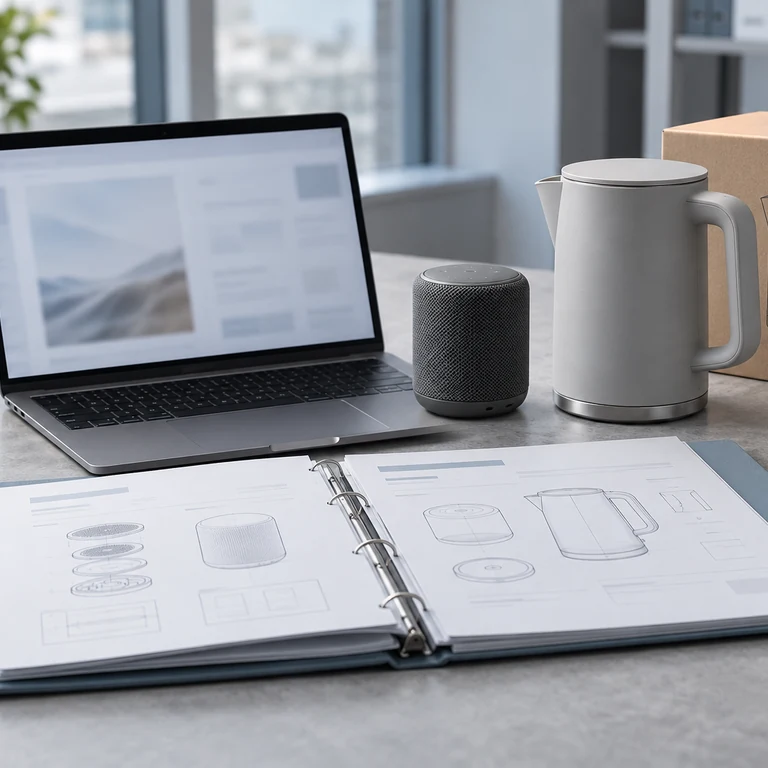
- Electrical appliances, such as a kettle connected to a 230 V supply: the Low Voltage Directive 2014/35/EU, alongside the other requirements that apply to the appliance.
- Products with Wi-Fi or Bluetooth, such as a wireless speaker: the Radio Equipment Directive 2014/53/EU.
These categories require a responsible economic operator established in the EU. For a manufacturer outside the EU that ships directly to the buyer and has no importer or fulfilment service provider covering that role, the solution is to appoint an authorised representative.
What changes if you already have an importer?
A European company that imports your products and fulfils the corresponding obligations can cover that role. In that case, you do not need to hire a representative solely to cover it as well.
Check who actually imports the goods. A distributor reselling products already placed on the market, or a company that only handles customs formalities, does not automatically take on that role.
If you also sell independently, review that sales channel: the importer does not automatically cover the units you ship directly to other customers.
What about products that do not require CE marking?
For clothing, conventional furniture and other basic consumer products, the role you need to have covered is that of the GPSR responsible person. If you are hiring an external provider to meet this need, the relevant service is a GPSR responsible person service.
When you appoint that provider under a mandate to perform these tasks, it legally acts as an authorised representative under the GPSR. This does not mean you must also purchase representation for CE marking if your product is not subject to that legislation.
A service limited to these basic products should not be assumed to cover toys or electrical appliances without checking its scope. You can read more about the difference between a responsible person and an authorised representative.
Can a marketplace or warehouse cover the role?
Selling on Amazon or another marketplace does not mean the platform acts as your representative.
A fulfilment service provider can legally take on the role when it performs the relevant activities and no other operator covers it. A company that stores goods and prepares orders may fall within this category; a courier that only delivers parcels does not.
A warehouse taking on that role does not demonstrate that it has the expertise to help you with product compliance. If its service is limited to storage, shipping and providing an address, do not count on it to spot certificates for a different model, identify missing tests or correct inaccurate labelling.
If Amazon blocks a listing or an authority requests documentation, those gaps will still need to be addressed. Without contracted technical support, you will have to find someone to review the problem and help you respond, possibly with a deadline already running.
Its legal obligations still apply. Before hiring a provider, check whether it has the capacity to fulfil them and whether it offers the technical assistance you need.
What you need to prepare before selling
Your product must meet European requirements when you place it on the market. To demonstrate this, you need a technical file containing documentation that matches the model you sell.
Depending on the product, you will need to gather:
- Technical specifications and model identification: characteristics, materials, components and intended use.
- Risk assessment: the hazards the product presents and how they have been reduced.
- Certificates and test reports: those needed to support its safety and compliance.
- Declaration of conformity: where required, as with the CE-marked products mentioned above.
- Labelling and instructions: identification, economic operator details, warnings and the relevant markings.
If your company does not have the technical expertise or resources to carry out the necessary checks, you will need support from a laboratory or specialist. Make sure you have the certificates and complete test reports, check which model they cover and keep them with the rest of the technical file.
If you outsource manufacturing, request the documentation before committing to the order. This allows you to review what is available and what is missing before you start selling.
You can explore this further in our guide to technical documentation for CE marking.
What support should you expect from your representative?
The representative must be able to perform the tasks it accepts under the mandate. If you also need it to review or prepare the technical file, check that this technical assistance is included in the service.
A provider with expertise in your product category can help you identify incomplete documentation, review labelling and understand which checks are still needed. The contracted scope should explain who will carry out that work and what happens if a gap is identified.
This becomes important when an issue arises. If you receive a request from an authority, you need to understand what is being asked and prepare a response supported by evidence. Check whether the provider offers that support and what it includes. No one can guarantee that a response will be accepted if the product or its documentation remains inadequate.
If you hire a provider expecting technical guidance and receive only an address, the work you need help with will remain unresolved. Before signing, ask who will review your documents, how they will help you correct deficiencies and who will respond when an issue arises.
Can the representative also be liable for damage caused by a defective product?
The new Product Liability Directive (EU) 2024/2853 provides that the authorised representative of a manufacturer established outside the EU may also be liable for damage caused by a defective product.
Where the manufacturer and representative are liable for the same damage, they may be jointly and severally liable: the injured person may claim full compensation from either of them, subject to the legal conditions.
The new regime will apply, through the national laws transposing the directive, to products placed on the market or put into service from 9 December 2026. There must be compensable damage caused by a defect; an incident does not automatically give rise to this liability.
Frequently asked questions
For the representation of the products covered in this guide, a representative established in one Member State can cover the EU countries included in the service. You must still meet the labelling and language requirements of each destination. This coverage does not replace other applicable national registrations or obligations.
Yes. Check that the agreement identifies the products or product families covered and the documentation that must be kept for each. Adding a new model does not mean it is automatically included: notify the provider and confirm coverage before placing it on the market.
Yes. You can request an initial review to identify what is missing and how to obtain it. However, hiring a provider does not authorise you to sell a product that is not yet compliant. Deficiencies must be resolved and the required documentation prepared before you place it on the market.
It may serve as evidence if it matches the product you sell and covers the relevant requirements. When you sell it under your own brand, you take on the manufacturer's obligations. You must have documentation consistent with your model and ensure that the representation covers your company and its products; you do not automatically inherit the factory's agreement.
The responsible economic operator's details must appear on the product or accompany it in one of the permitted locations, such as the packaging, parcel or an accompanying document. Online sales offers must also display the required responsible operator details. Ask your provider to confirm the correct location and content for your category before printing.
Yes. Coordinate the end of the previous mandate and the start of the new one to avoid gaps in coverage. Review the availability of documentation and which details need updating on labels and online listings. If you hold stock bearing the previous details, agree how to handle it before the change.
Gather the notification, identify the deadline and seek technical support as soon as possible. The representation, documentation and product will all need to be reviewed. Appointing a representative afterwards does not remove earlier non-compliance or guarantee that the case will be closed, but it allows you to organise the response and the necessary corrections.
Before you appoint a provider
Explain what product you sell, what documentation you have and how it will reach the European buyer. Ask the provider to confirm which role it will take on, what it will review and what help you will receive if a problem arises.
At Conformity Point, we review these details with you to assess your representation and documentation support needs. Explore our EU authorised representative service.
Official sources
- Market Surveillance Regulation and representatives' obligations — EUR-Lex.
- General Product Safety Regulation — EUR-Lex.
- Conformity assessment and documentation — Your Europe.
- Guidelines on responsible economic operators — European Commission.
- Product Liability Directive — EUR-Lex.
- Application date of the new liability regime — European Commission.

About the author
Written by Juan Manuel Beltrán, Founder & Product Compliance Consultant at Conformity Point. A specialist in consumer product compliance for the European market, he helps manufacturers, importers and brands sell consumer products in Europe.
Technical and regulatory review: Conformity Point. Last updated: 20 October 2026.
This article provides general guidance and does not constitute legal advice. How the requirements described apply depends on the specific product's category, function, design, intended use, risks, applicable legislation and documentation.